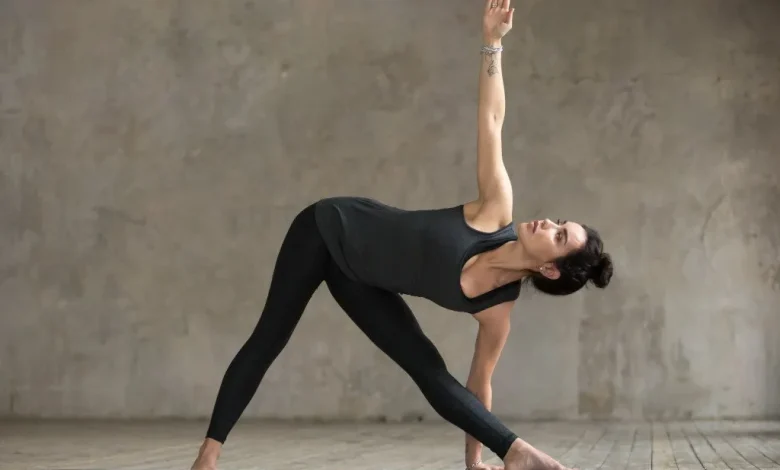
Video can reveal changes in a pose that are difficult to feel while practising. It can also encourage unhelpful comparison when appearance becomes the main measure of success. When video is used during hatha yoga, the recording should answer a specific movement question rather than decide whether a participant looks sufficiently flexible or symmetrical.
The most useful review focuses on control, consistency and the relationship between entry and exit. A camera cannot determine comfort, effort or internal pressure, so visual information must be combined with participant feedback and instructor observation.
Start With a Clear Question
Recording an entire class without a defined purpose produces large amounts of footage and little useful information. Before filming, choose one question.
Examples include:
- Does the front knee change position as fatigue develops?
- Does the pelvis rotate during a balance?
- Can the arms move overhead without the ribs lifting significantly?
- Is the exit as controlled as the entry?
- Does one side use a noticeably different strategy?
- Does reducing the pose depth improve stability?
A clear question determines the camera angle and reduces the temptation to evaluate irrelevant details.
Camera Position Changes What the Video Shows
A front view can display left-to-right weight shifts but may hide movement occurring forwards or backwards. A side view may show trunk and hip relationships but conceal rotation.
Camera height and lens angle also affect appearance. A phone placed close to the floor can distort limb proportions. A wide-angle lens may make the side closest to the camera appear larger.
For simple comparison, place the camera at approximately the height of the area being observed and keep the distance consistent. Use the same angle when recording again later.
Perfect filming conditions are unnecessary, but consistency makes comparison more meaningful.
Appearance Is Not the Same as Function
Bodies differ in bone structure, proportions and available range. Two people can perform the same pose effectively without looking identical.
Video may show that one hip sits higher or one foot turns differently. This observation does not automatically identify a problem.
The participant should ask whether the position is comfortable, controlled and suitable for the intention of the pose. Cosmetic symmetry should not override individual anatomy.
A visually deep pose is also not necessarily better. If the participant reaches farther by losing balance or holding the breath, the footage has shown greater range rather than improved quality.
Review Transitions, Not Only Final Poses
A still image captures one moment. It may miss the part where control is lost.
Video is particularly useful for reviewing how the participant enters and exits. A final pose may appear stable even though momentum was required to reach it.
Slow playback can reveal:
- Sudden weight shifts.
- Breath-holding accompanied by visible bracing.
- A joint moving rapidly through one section.
- Reliance on momentum.
- A different exit strategy from the entry.
- Technique changing as the hold continues.
These details often provide more practical information than the final shape.
Limit the Number of Corrections
Video can expose many small differences at once. Trying to correct all of them may make the next attempt rigid and confusing.
Select one change that relates to the original question. If the knee drifts during a lunge, the next attempt might use a shorter stance or reduced depth.
Record again only if another view will clarify whether the adjustment helped. Repeated filming can interrupt the rhythm of practice and turn the session into a production exercise.
Combine Video With Internal Feedback
After recording, the participant should describe how the pose felt before watching the footage. This preserves internal information that may otherwise be replaced by visual judgement.
Useful questions include:
- Where was the effort felt?
- Was breathing continuous?
- Did one side feel less stable?
- Was there pressure or pain?
- Did the participant feel able to exit slowly?
- Which part required the most concentration?
Compare these answers with the video. When visual and internal feedback disagree, the difference becomes a useful discussion with the instructor.
Protect Privacy and Consent
Filming inside a shared studio requires clear permission. Other participants should not appear in the frame unless they have agreed.
A studio may have its own recording policy, and that policy should be followed. Participants should not assume that a class booking includes permission to film.
If an instructor records a participant for feedback, the purpose, storage and deletion process should be explained. The participant should know whether the file remains on the instructor’s device, is uploaded to a platform or is deleted after review.
Singapore organisations handling identifiable recordings should treat privacy seriously. A video showing a person’s face and movement can be personal data. Consent should be specific rather than implied.
Avoid Public Comparison
Posting practice footage online may invite comments based on appearance rather than movement quality. It can also encourage participants to select visually dramatic poses instead of exercises relevant to their needs.
If footage is shared, consider whether the participant understands the audience and potential permanence of the post. A private review with an instructor often provides more useful information.
Video should support learning, not create pressure to perform for social media.
Use Recording at Useful Intervals
Daily filming is rarely necessary. Meaningful changes in strength, control and mobility may take time.
A recording every few weeks can show whether a specific strategy has changed. Keep the setup, camera angle and pose variation similar.
Progress may appear as a smoother transition, steadier breathing or less reliance on support, even if the final pose depth remains unchanged.
Keep Skilled Observation at the Centre
At Yoga Edition, participants can ask whether video is appropriate for a particular movement and confirm the studio’s recording policy. Instructor guidance helps identify which visible changes matter and which are simply normal variation.
Technology is most useful when it narrows attention. One recording, one question and one practical adjustment are often enough.
Video cannot measure every relevant feature of Hatha practice. It cannot feel joint pressure, recognise personal confidence or decide whether a pose is worthwhile. Used carefully, it becomes a feedback tool. Used cosmetically, it can turn individual movement into an unnecessary comparison exercise.


